Wait, I don’t want that dental X-ray.
Do you get a little nervous when you hear that X-rays are needed? While most people take getting X-rays with ease, some people have concerns about radiation and the risk of getting cancer from too much exposure. This is a valid concern we want to address in this month’s blog.
Throughout our lives, the need for imaging is present. Whether an X-ray for a suspected broken bone, an MRI for that bad knee, a mammogram for preventative care, or digital X-rays at the dentist. But X-rays are one of the few types of imaging needed with regularity. And while they emit very low levels of radiation, there is radiation nonetheless. Is it enough to be concerned about? Let’s discuss this.
Dental X-rays are Essential to the Dentist
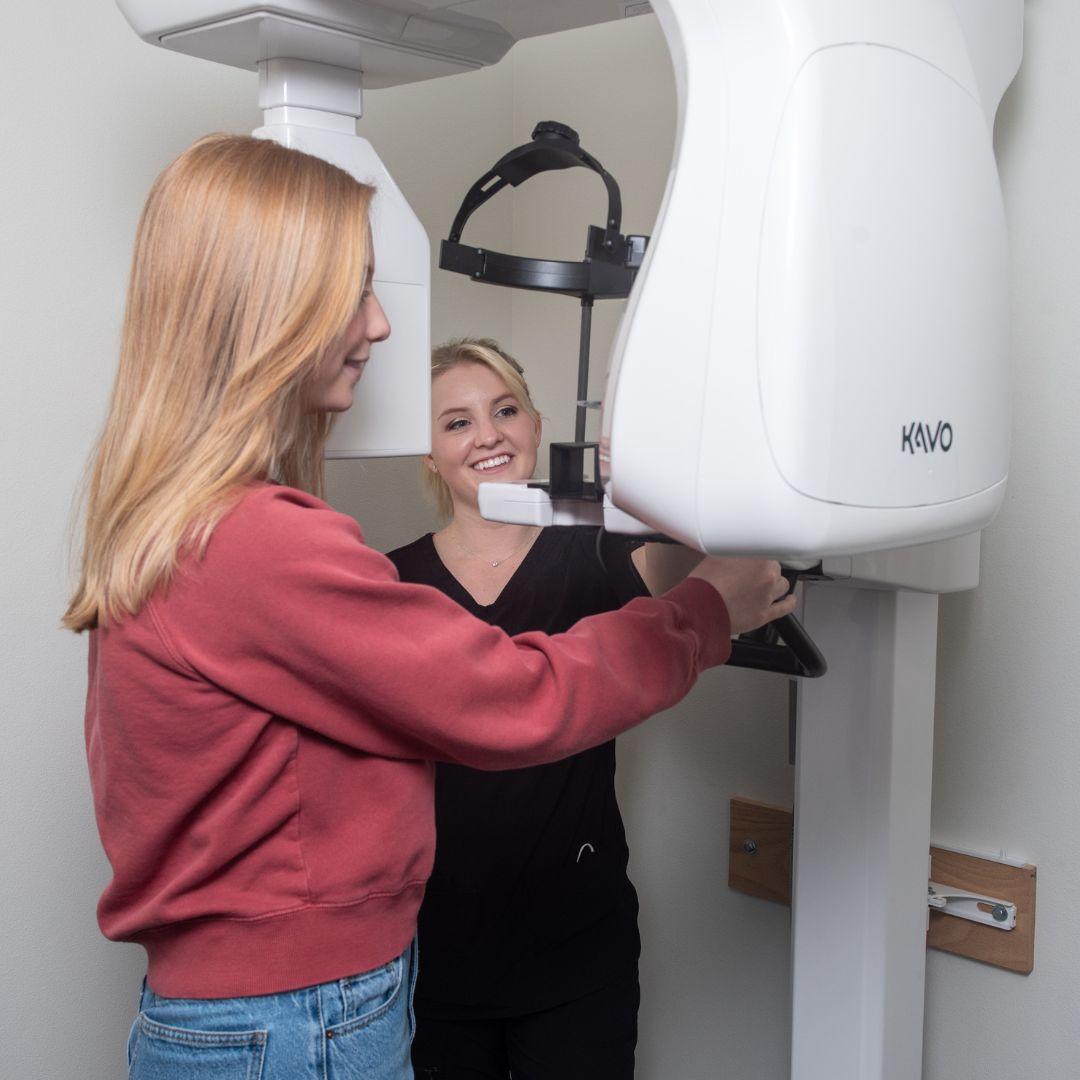
X-rays allow the dentist to see bones, tissue, and between the teeth – a place where cavities like to hide. With a panoramic X-ray (the one that goes around your head), your dentist can also see your jaws, temporomandibular joint (TMJ), and sinuses. Dr. Andy recalls one patient that had lesions that were detected on imaging. He referred them to a specialist for further evaluation. It turned out that those lesions were cancerous, but because the patient routinely received their X-rays, they were caught early, and there’s a happy ending to the story.
How Much Radiation is in a Dental X-ray?
Radiation exposure is all around us. A set of 4 bitewing X-rays (which you typically get about once a year) exposes you to about .005 millisieverts (mSv) of radiation, and a panoramic X-ray is roughly .01 mSv. To put that in perspective, the average American receives about 6.2 mSv every year — around half of it from the natural environment, with the soil alone exposing you to roughly .21 mSv annually. A single dental X-ray is a tiny slice of your yearly total.
Digital X-rays are Different.
Dental imaging has changed over the years. Most dentists now use digital X-rays and faster receptors, which substantially reduce your exposure to radiation compared with older film. Plus, they are fast and much better quality, allowing your dentist to pinpoint issues quickly. And the speed factor gives you more time to chit-chat about fun stuff with Dr. Andy (you’re welcome).
Regular exams and X-rays are part of prevention — see our dental basics and why your mouth is a window to your whole-body health. Your health is a top priority. We like to be transparent with our patients and always invite questions or concerns. If this topic has been brought up for you, please give us a call or talk to Dr. Andy at your next appointment.
We look forward to seeing you soon.