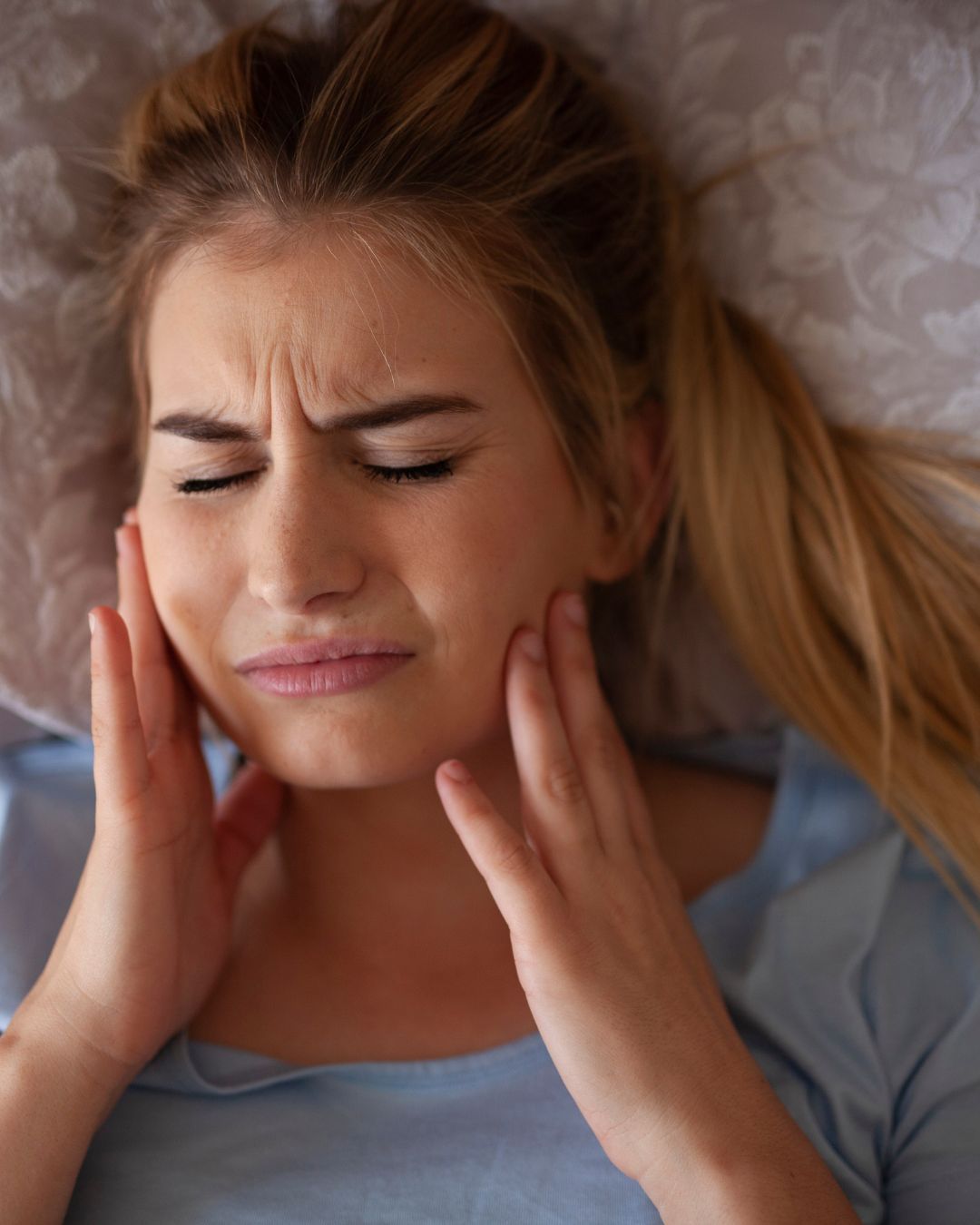
Have you ever woken up with a headache you can’t quite explain? Or notice a persistent soreness in your jaw or neck? You might be unknowingly engaging in a nocturnal battle with your teeth – the insidious habits of clenching and grinding. At Living Dental Health, we recently had an enlightening chat with our fantastic dental assistant, Christy Spencer, who shed some serious light on this pervasive problem and, more importantly, how to protect your pearly whites from the havoc that can come from clenching and grinding teeth.
The Gnawing Truth: What Clenching and Grinding Teeth Does
“These seemingly harmless habits can cause a surprising amount of damage,” Christy revealed, painting a vivid picture of the havoc they wreak. It’s not just about a bit of wear and tear; we’re talking about serious long-term consequences:
- Bone Recession and Eventual Tooth Loss: Imagine the very foundation of your teeth slowly eroding. Clenching and grinding can lead to bone recession, weakening the support for your teeth, and eventually, yes, even tooth loss.
- Broken, Cracked, and Worn-Down Teeth: Your teeth are incredibly strong, but they’re not invincible. The intense pressure from clenching and grinding teeth can cause chips, cracks, and even outright fractures. “It is not uncommon to see teeth worn down into the nerve,” Christy explained, “which means you’re looking at a root canal.”
- The Pits and the Pain: Beyond general wear, clenching can create distinct “pits” in the cusp tips of your teeth. This isn’t just cosmetic; it signifies immense pressure that your teeth simply can’t handle. And it isn’t just the teeth that suffer. The ligaments that hold teeth in place can become inflamed, which causes cold sensitivity and discomfort when chewing.
Why Are We Doing This to Ourselves? The Root Causes
Why do we unknowingly engage in these destructive habits? According to Christy, it often boils down to two main culprits:
The Great Alignment Mystery: How Your Teeth Occlude “Sometimes, it’s simply how your teeth come together,” Christy explained. Our bodies are surprisingly clever at trying to find comfort. If your teeth don’t align in a way that allows your jaw to rest comfortably, your body will try to “fix” it by grinding.
This is where things get interesting. Christy highlighted how, in the past, many people who received orthodontic treatment as a child would have their premolars removed to create space (I am raising my hand here). But this space created is not natural. The jaw has a natural vertical dimension of occlusion or VDO, which is essentially how open your jaw is at rest.
“If orthodontia alters the jaw negatively, the TMJ [temporomandibular joint] won’t be comfortable, and the body will clench and grind to try to resolve the issue and adjust.”
It’s your jaw’s way of trying to find its happy place! If the VDO is off, your body compensates and tries to fix it by (you know the answer now) clenching and grinding.
But here’s the kicker: even if you’ve never had braces, you might still clench and grind in an unconscious effort to achieve a comfortable jaw position.
Stress: The Silent Jaw-Clencher “Stress,” Christy stated, “will be taken out on your teeth.” It’s a common, often unconscious, coping mechanism. Even when we’re asleep, our brains are still active, and if stress is simmering beneath the surface, it can manifest as clenching and grinding, even if you’re not consciously aware of it.
The Fix: Your Nighttime Knight in Shining Armor (and More!)
So, what’s a clencher/grinder to do?
- The Power of the Custom Night Guard: “You can get two or three-night guards for the cost of a single crown,” Christy emphasized, highlighting the preventative power of these devices. But beware of those over-the-counter options! “The ones you buy at the drugstore can actually cause you to clench and grind more because they’re chewy.”
The magic lies in a custom-made dental night guard. (What's All the Fuss About Nightguards? breaks down how they work and whether they're worth it.) These are “form-fitted to your teeth and have a soft lining but a hard shell, so your jaw will eventually relax.” Crucially, a good night guard isn’t just about impressions; it’s about opening your VDO to get your jaw into a truly relaxed position. This “bite registration” is key, and any dentist who makes your night guard should be measuring VDO to ensure the night guard does what it is supposed to. These custom guards are durable. Christy has seen them last around 10-15 years, and while they cost around $700 (and are often not covered by insurance), it’s a small price to pay compared to a full mouth reconstruction ($50-80k!) for severely worn teeth.
Even if you still subconsciously clench, the night guard makes it uncomfortable, prompting your jaw to release. Your brain is still “working” even when you’re asleep, but it will eventually learn that clenching against the hard surface doesn’t feel good.
- Orthodontics: Another Path to Comfort: In some cases, orthodontics can be a viable option to realign teeth and achieve a more comfortable jaw position, addressing the root cause of the grinding. We have a lot of adults walking around with braces on their teeth for this very reason!
- Jaw Stretches for Instant Relief: Christy offered a simple, practical tip: “During the day If you notice you are clenching your jaw – open your jaw as wide as possible for 10 seconds, three times, to stretch out that muscle.” This exercise helps relax the often-tense muscles in your jaw.
Are You a Clencher or a Grinder? How to Tell
So, how do you know if you’re part of the clenching and grinding teeth club?
- The Dental Detective: Your dentist is your best ally. During an exam, they might notice:
- Flat Teeth: Healthy teeth have ridges; worn-down, flat surfaces are a tell-tale sign of grinding.
- Worn Dentin: Perhaps your dentist repaired your teeth by placing a filling over your worn-down teeth but didn’t address the underlying cause. We call that a red flag.
- Receding Bone Levels: X-rays can reveal bone loss, which often forms at an angle, particularly in areas most impacted by the pressure.
- Pits on Cusp Tips: As mentioned earlier, these indicate intense clenching pressure.
- The Morning After: Waking up with a headache, a sore jaw, or even a sore TMJ (which can be more pronounced on one side if your clenching/grinding is imbalanced) are strong indicators — and if headaches are your main clue, a chronic headache is often TMD in disguise. You might also notice tightness in your sternocleidomastoid (SCM) neck muscles.
- Your Sleep Partner: Sometimes, the most direct evidence comes from your partner. If they’ve told you they hear you clenching or grinding in your sleep, take it seriously!
Clenching and grinding teeth are more than just annoying habits; they are silent destroyers that can have serious ramifications on your oral health. Being proactive before things go south is a wise investment in your teeth. So go to the restroom and take a look at your mouth in the mirror. How do your teeth look? Or better yet, give us a call and schedule a dental exam with Dr. Andy Engel. Assessing for clenching and grinding is part of a normal exam. He will give you his honest opinion and if he notes signs of clenching and grinding, will provide a conservative plan to address it.